Tita’s Birth
Like Water for ChocolateTita’s Birth is the family story of an arrival that makes the kitchen both Tita’s birthplace and the defining place of her life. Recounted through Nacha’s account, it joins bodily sensitivity, food, and family memory: Tita’s crying brings on her premature birth, and the tears left behind become salt for the household’s cooking.
The Birth in the Kitchen
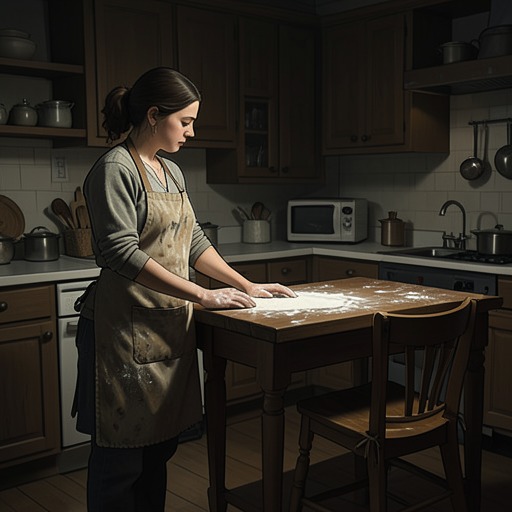
Tita’s sensitivity to onions is presented as beginning before she was born. When onions were chopped, she cried so persistently in her great-grandmother’s womb that even Nacha, who was half-deaf, could hear her. Her wailing eventually brought on early labor. Tita was born prematurely on the kitchen table, amid the smells of noodle soup, herbs, milk, garlic, and onion.
The story gives her tears an astonishing material consequence. They overflowed the table and spread across the kitchen floor. After the water dried in the sun, Nacha swept up the residue: there was enough salt to fill a ten-pound sack, which the household used in cooking for a long time. The kitchen is therefore not merely the setting of Tita’s birth; it is the place where the event becomes part of everyday family life.
Nacha and the Kitchen as Home
Tita’s connection to the kitchen begins on the day she is born. The narrative says she felt a deep love for it and spent most of her life there. That attachment takes on practical importance almost immediately. When Tita was two days old, her father died of a heart attack, and the shock dried up Mama Elena’s milk. With no powdered milk available and no wet nurse to be found, Nacha offered to feed the infant and take responsibility for her nourishment.
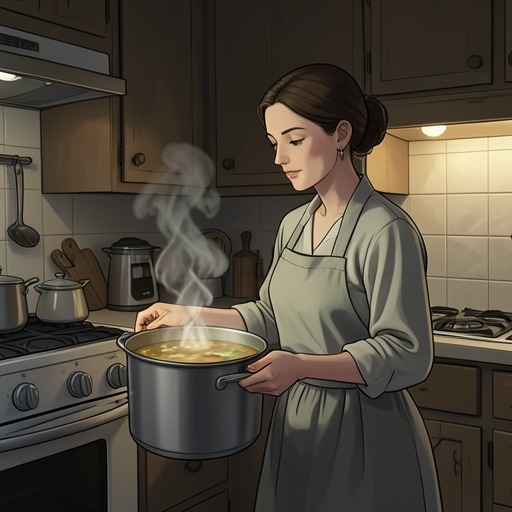
Although Nacha had never married or had children and could not read or write, she was deeply knowledgeable about cooking. Mama Elena accepted her offer while mourning and managing the ranch. Through Nacha’s care, the kitchen becomes not only the setting of Tita’s birth but also the place where her earliest feeding and education begin.
Tears, Tradition, and Tita’s Future
The account connects Tita’s tears at birth with the sorrow and constraint that later mark her life. It suggests that her crying may have anticipated the fact that she would be denied marriage. Mama Elena tells her that, as the youngest daughter, she must care for her mother until her death. Tita questions the logic and fairness of the custom, including who will care for a daughter who is forbidden to marry and have children, but the family expects obedience rather than debate.
The birth story thus places Tita’s emotional life and her lack of control over her future beside her early bond with the kitchen. The table receives both the tears that announce her arrival and the tears she sheds after learning her assigned role. Her questions about the tradition remain unanswered, while the kitchen continues to be the space in which she works, learns, and expresses herself.
The Birth Story’s Afterlife
The birth’s unusual details establish a pattern in which emotion becomes materially present through food and domestic labor. Salt from Tita’s tears enters the household’s cooking; later, Tita begins recording recipes in Tita’s cookbook, preserving culinary knowledge in written form. The narrative eventually connects that inheritance to the cookbook passed down by Esperanza and to a descendant who continues preparing family recipes. Tita’s birth therefore begins not only her life in the kitchen but also a chain of memory in which food carries her story beyond her own lifetime.